
Make It Last: Caring for Throws, Textiles and Candles

Buying well is half the job. The other half is the unglamorous business of care — the washing temperatures, the wick trims, the five-minute habits that decide whether something lasts two years or ten. Most of it is not difficult. Most of it is just not on the label, or is on the label in symbols nobody has ever confidently decoded. So here is the plain-English version for the things that make a home feel like one: throws, everyday textiles and candles.
Throws and blankets: the pilling problem
A throw lives a harder life than most textiles. It gets sat on, napped under, dragged to the garden and occasionally introduced to a takeaway. The main enemies are pilling, stretching and the slow grey drift that comes from washing it wrong.
- Wash cool and infrequently. Thirty degrees, gentle cycle, and only when it actually needs it — over-washing ages knits faster than use does.
- Skip the fabric softener on synthetics and blends. It coats the fibres, which is where that flat, slightly greasy feel comes from.
- Dry flat or over an airer, never on a radiator. Heat plus weight equals a stretched hem that never quite recovers.
- De-pill with a fabric comb or a purpose-made shaver, gently, when pills appear. Pilling is fibres, not failure — five minutes fixes a season of use.
- Fold along different lines each time it goes away, so no single crease becomes permanent.
One reason we stock the Chunky Knit Throw Blanket in a recycled-polyester blend rather than wool is exactly this: it takes a 30°C machine wash and comes out itself again. Wool is a beautiful fibre with the temperament of a diva. A throw that lives on a sofa, in a real house, near real gravy, is better off washable — that is buy-it-once thinking applied to fabric, and the fuller argument for it lives in the buy-it-once piece.
Everyday textiles: canvas, liners and the rest
The same low-effort principles run through the rest of the textile household. Canvas bags machine wash cold and air dry — a tumble dryer will shrink and buckle the base panel that keeps them standing. Basket liners come out and go in with the towels. Cushion covers wash inside out to protect the face fabric. None of this is fussy; it is one extra thought at the point of washing, roughly monthly.
The general rule, if you only remember one: heat is the enemy. Hot washes, hot dryers and radiators do more cumulative damage to home textiles than dirt ever will. Cold water, air, patience.
While we are in the kitchen: wooden boards belong in this piece too, because they are the most commonly mistreated things in the house. No wooden board goes in the dishwasher, whatever anyone claims — hot water and detergent open the grain and the board cups, cracks or both. Hand wash, stand it on its edge to dry so both faces get air, and once a month wipe on a little food-safe mineral oil and let it drink overnight. Two minutes of oiling is the entire difference between a board that lasts eighteen months and one that outlasts the knives.
Candles: the first burn decides everything
Candles feel like they should not need instructions, which is why most of them die badly. The single most important thing happens the first time you light one: wax has a memory, and a candle that is put out before the melt pool reaches the edge of the jar will tunnel down the middle forever after, wasting the outer third of the wax you paid for.
- First burn: give it time — around two hours for a small jar — until the melted wax reaches the glass all the way round.
- Every burn after: trim the wick to about 5mm before lighting. Long wicks smoke, mushroom and throw soot up the jar.
- Keep burns to a few hours. Marathon sessions overheat the jar and burn the scent off faster than it can be enjoyed.
- Put candles out with the lid or a snuffer rather than blowing, if you can — less smoke, no wax spatter, no relit-wick surprises.
- Store them out of sunlight. Scent and colour both fade in a bright window.
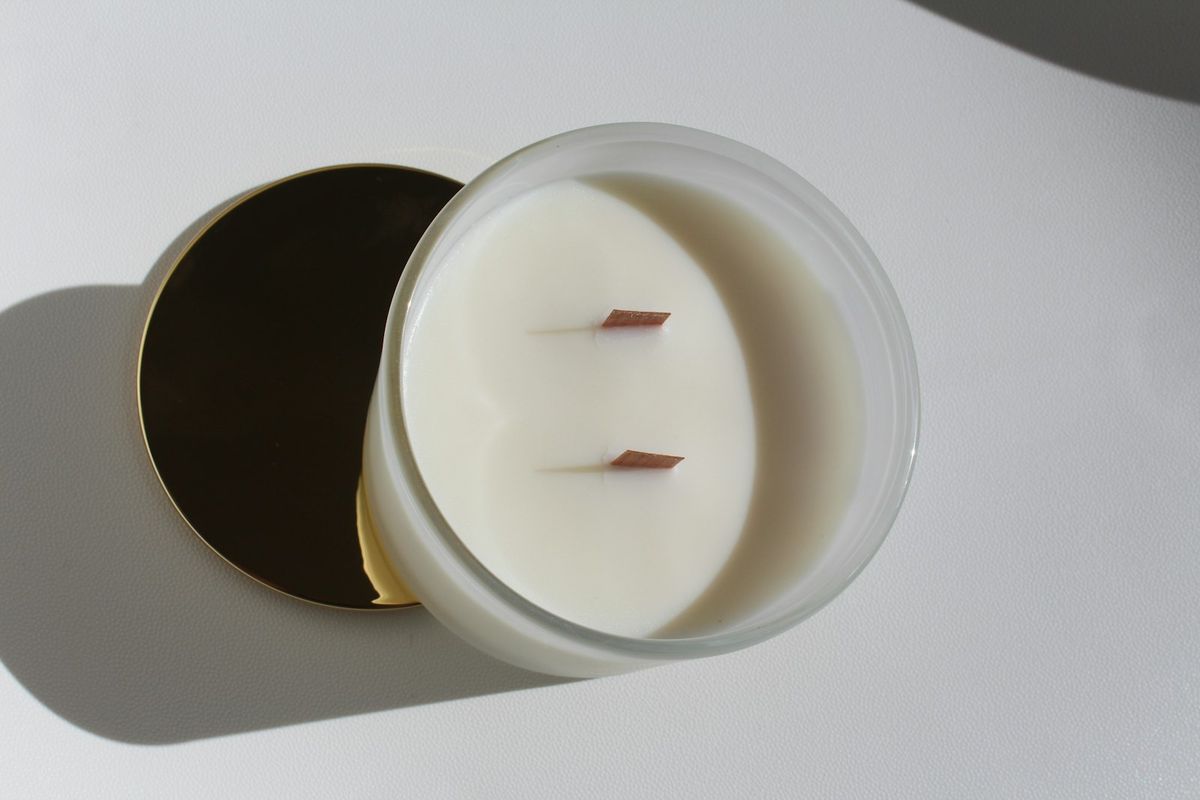
Soy wax, for what it is worth, is more forgiving than paraffin — it burns cooler and slower — but it follows the same rules. The Scented Candle Trio comes with these instructions in the box for exactly this reason: a 25-hour candle only delivers its 25 hours if the first two go well. And when a jar is done, ten minutes in a warm oven (switched off, residual heat) loosens the last of the wax so the amber glass can start its second life holding pens, tealights or the small hardware of daily life.
The five-minute care habit
None of the above takes real time; it takes remembering. The trick that works for me is attaching care to an existing rhythm rather than scheduling it. Wick trims happen when I fetch the matches. The throw gets de-pilled when the sofa cushions get plumped. The bag gets washed the first cold-wash Sunday of the month. Care that waits for a free afternoon never happens; care that piggybacks on something you already do happens by itself.
Heat is the enemy. Cold water, air, patience.
There is a quiet pleasure in this that is easy to undersell. A throw in its fourth winter that still looks right on the sofa, a candle jar burned clean to the bottom — these are small proofs that you are running your home rather than just passing through it. Buy things worth caring for, then actually care for them. The second part is where the value lives.
Found this useful? Pass it on.